Link Building for AI Answer Engines: Tactics That Get You Cited
Find out how you can use backlinking to stay relevant and rank in AI search.
Written by
AI search
Dec 1, 2025

Tl;dr
AI answer engines treat links as contextual trust signals, so a few high-authority citations matter far more than many weak backlinks.
Prioritize authoritative publications, diversify link types (text, image, nofollow, citation), and build tight topical clusters to be associated with specific queries.
Monitor brand mentions, optimize anchor context, and avoid aggressive link velocity; measure AI Share of Voice and authority distribution.
Use Telepathic to track and monitor backlinks and find new backlinking opportunities.
Backlinks used to be a numbers game: build volume, optimize for domain metrics, and wait for rankings. That approach no longer works. Modern AI answer engines like ChatGPT, Perplexity, and Google AI Overview treat links as contextual signals of credibility and expertise.
They prioritize who cites you, why they cite you, and how your content fits within a network of trusted references. For brands and SaaS teams, the shift is clear: move from chasing quantity to earning targeted, high-authority citations that teach AI models to surface your content.
Telepathic streamlines this shift by identifying the specific publications, citation patterns, and content assets most likely to improve your AI visibility.
The new reality: Why AI models process links differently
Traditional search engines crawl links mechanically. They count, they weigh, they rank. AI models do something fundamentally different.
These systems evaluate context, credibility patterns, and citation networks similar to how researchers assess sources. A link from a trusted, authoritative outlet acts as a trust signal that helps AI models surface your content as a reliable answer.
Think about how you'd evaluate a source yourself. You wouldn't just count references. You'd consider who's citing them, in what context, and whether those sources carry weight. That's exactly what's happening inside these AI models.
Here's how to earn citations in AI:
Brand authority matters
Focus on tactics that reliably increase perceived authority with AI systems. Practical steps include:
Prioritize outreach to editorial teams at high-quality publications in your niche. Guest articles, expert commentary, and data-driven contributions deliver the most durable wins.
Create original research or unique data assets that authoritative sites want to reference and link to.
Secure mentions in academic, government, or industry reports by contributing expertise, case studies, or partnering on whitepapers.
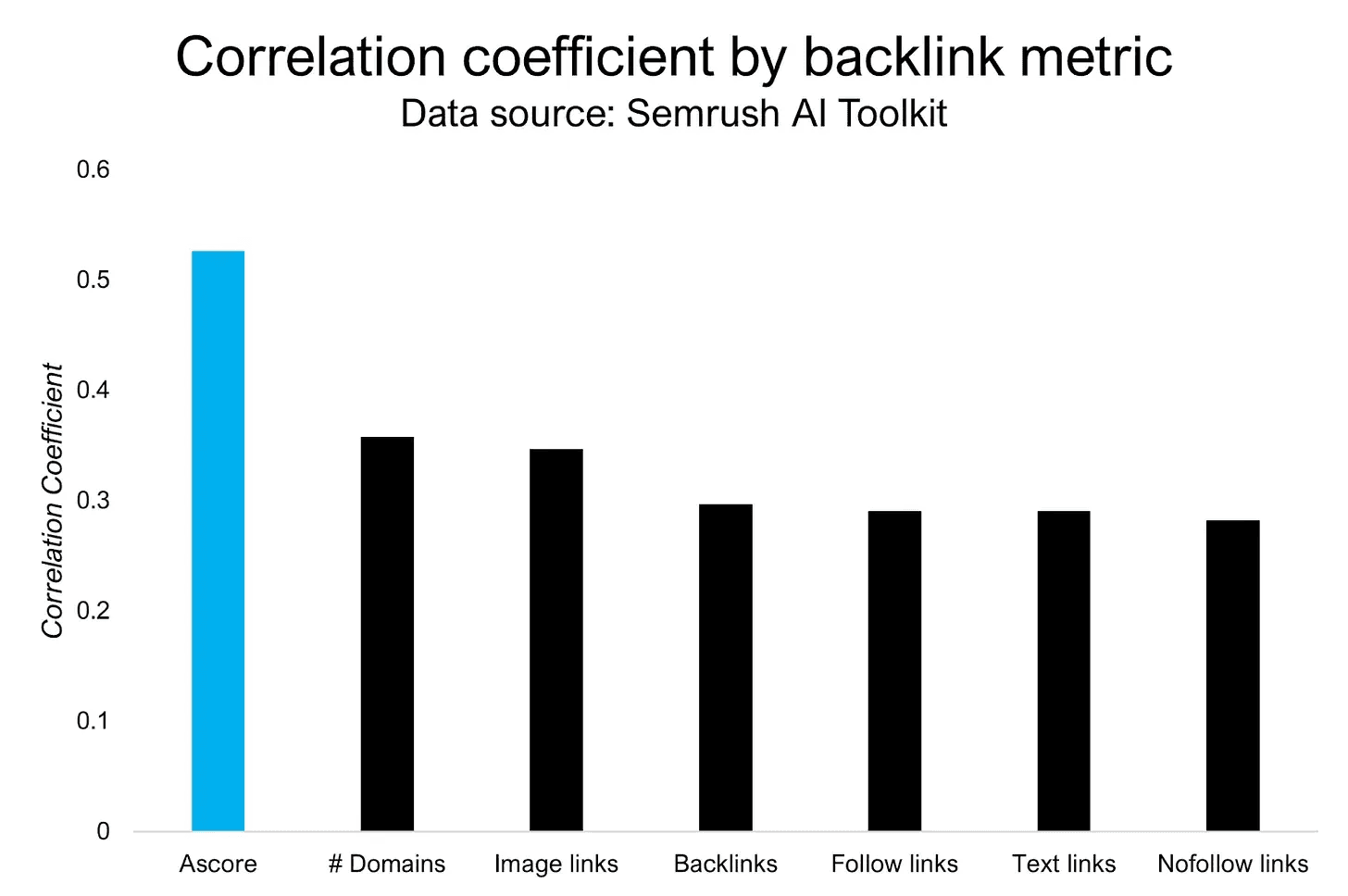
A small number of well-placed, high-quality references will influence AI systems more than a large quantity of weak links.
Quality thresholds: How to reach them
AI visibility often shifts once you cross practical quality thresholds. Rather than chasing arbitrary scores, follow repeatable tactics:
Target the top publications and outlets that your competitors reference; getting cited there signals domain-level credibility.
Convert brand mentions into framed contributions (quotes, bylines, or data snippets) so the mention becomes a clear citation of your expertise.
Use partnerships and co-authored pieces with recognized organizations to leverage their credibility.
These actions create the contextual links and co-citation patterns AI models interpret as trust signals.
Nofollow links: The unexpected player
Nofollow links and non-traditional references matter in practice—not because of an HTML attribute, but because many high-trust sources (Wikipedia, news sites, Reddit) use nofollow by default. Treat these opportunities as primary targets, not throwaways.
Pursue editorial mentions, profile features, and authoritative discussions even when links are nofollow. Those contexts still contribute to the network of trust AI models learn from.
Tactical approach: monitor high-authority platforms for topical conversations, contribute expert answers or data, and follow up to convert mentions into richer citations (quotes, data embeds, or structured references).
Tactical Recommendations for AI-First Link Building
1. Target authority over volume
Imagine you built a B2B sales tool called PitchPilot and want AI answer engines to cite your site when users ask "best tools for sales outreach." Your first move is to prioritize a small set of high-authority citations that signal trust to models rather than chasing thousands of weak links.
Start by mapping the domains that already inform AI answers for your niche and prioritize targets with Authority Scores above 75. For PitchPilot, that includes industry publications that publish sales playbooks, major SaaS review sites, and respected sales research groups.
Industry-leading publications in your niche
Academic institutions and research organizations
Government domains relevant to your sector
Established media outlets with strong editorial standards
Telepathic accelerates this process by surfacing which high-authority domains are most likely to move PitchPilot's AI Share of Voice. Instead of manual guesswork, Telepathic shows the specific publications, the topics they cite for AI answers, and why each target matters.
2. Diversify your link types
For PitchPilot, diversify beyond text links: publish an original sales benchmark report (citation links), create shareable infographics showing outreach metrics (image links), and pursue editorial product roundups even if they use nofollow.
Text Links: Your foundation. Aim for contextual placements within relevant content, like a guest post analyzing outreach sequences that links to PitchPilot's benchmark.
Image Links: Create infographics and data visualizations (for example, conversion funnel diagrams from PitchPilot's report) that industry writers will embed and credit.
Nofollow Links: Pursue mentions on high-trust sites and directories even if links are nofollow—a product roundup on a major SaaS review site can still teach AI to surface PitchPilot as an option.
Citation Links: Publish a repeatable dataset or whitepaper that academic or industry reports will cite. These become durable AI signals for PitchPilot's expertise.
3. Build topical authority clusters
Pick 3–5 tightly focused topics that align with PitchPilot's strengths. examples: "cold outreach sequencing," "email subject-line optimization," and "sales cadence analytics." Build deep cornerstone content for each.
Identify 3–5 core topics central to your expertise
Develop comprehensive resources for each topic
Build links that reinforce your authority in these specific areas
Cross-link between related pieces to strengthen topical signals
Using PitchPilot as an example: dedicate a month to publishing a benchmark study on outreach response rates, follow with a guest post that cites the study, then get the data included in an industry roundup. Over time, AI models begin associating PitchPilot with those specific topics.
4. Leverage brand mentions and co-citations
When a recognized sales consultancy mentions PitchPilot in an article about outreach tools, even without a direct link, that co-mention helps AI models connect your brand to the topic. Aim for co-citations with recognized leaders in the sales space.
Monitor unlinked mentions of PitchPilot and request attribution upgrades where appropriate: provide a short quote, a data snippet, or an embeddable chart to encourage editors to add a citation. Even without a follow link, the contextual mention still strengthens AI trust.
5. Optimize anchor text for context
For PitchPilot, anchors should describe the linked resource naturally. E.g., "PitchPilot's outreach response benchmark" rather than stuffed keywords. Contextual, descriptive anchors help AI models understand what the linked page provides.
Your anchor text should:
Describe the linked content accurately
Fit naturally within the surrounding paragraph
Vary substantially across your backlink profile
Include your brand name regularly but not exclusively
For SaaS companies like PitchPilot, Telepathic recommends anchor examples that balance brand and context and surfaces historical anchor patterns that AI models have previously preferred for similar tools.
Wrapping up
Telepathic automates the discovery and prioritization of link targets based on likely AI impact. For PitchPilot, the platform continuously analyzes where the brand is already being cited, which outlets influence AI answers for your topics, and which opportunities are easiest to convert.
The backlink recommendation engine goes beyond simple domain metrics and analyzes:
Topical relevance to your content clusters, so PitchPilot pursues links that strengthen its three core topics
Historical AI citation patterns from specific sources, showing which publications have previously influenced AI answers about sales tools
Competitive link gaps affecting your AI Share of Voice, revealing where competitors are being cited and PitchPilot is not
Emerging high-authority sites in your industry that are starting to feed AI models and present early high-impact opportunities
Telepathic also helps operationalize outreach: it suggests the best content asset to pitch each target (infographic, data snippet, expert quote), tracks conversion rates, and measures changes in AI Share of Voice so you can see how PitchPilot's citations shift over time.
Common pitfalls and how to avoid them
Pitfall 1: Obsessing Over Domain Rating. Domain Rating, Domain Authority, and similar third-party metrics don't directly correlate with AI visibility. Focus on Authority Score and actual AI citation data instead.
Pitfall 2: Ignoring Internal Linking. AI models evaluate your entire site structure. Strong internal linking helps establish topical authority and improves content discoverability for AI crawlers.
Pitfall 3: Neglecting Content Quality. The best backlinks won't help if your content doesn't meet AI quality thresholds. Ensure every piece you're building links to provides genuine value and demonstrates expertise.
Pitfall 4: Link Velocity Spikes. Sudden surges in backlink acquisition can trigger AI model skepticism. Maintain steady, natural link growth rather than burst campaigns.
Track these metrics to gauge your AI link-building effectiveness:
AI Share of Voice: Your visibility percentage across AI platforms for target keywords
Authority Score Distribution: Percentage of backlinks from AS 75+ domains
Citation Frequency: How often AI models reference your content
Topical Authority Score: Your perceived expertise in specific subject areas
Link Diversity Index: Balance across link types, sources, and anchor text
Set baselines, then measure monthly progress. Expect initial gains within 4–6 weeks, with substantial improvements typically appearing after 3–4 months of consistent effort.
Wrapping up
AI search isn't the future anymore; it's the present. Your link-building strategy needs to catch up. The good news? Most of your competitors are still playing by the old rules. That gives you a massive opportunity if you move now.
Telepathic's platform provides everything you need: automated backlink analysis, AI-optimized recommendations, and integrated content optimization tools. See exactly how your current link profile impacts AI visibility and get personalized recommendations for improvement.
Want to improve your backlinking game? Book a demo with us today!
FAQs
Do backlinks from social media platforms impact AI search visibility?
Social signals show moderate correlation with AI visibility, though less than traditional backlinks. Platforms like LinkedIn and X contribute primarily through brand mention frequency and engagement metrics rather than direct link equity. Focus on social platforms where your audience actively shares and discusses industry content.
How quickly do new backlinks impact AI answer engine rankings?
AI models update at different rates. ChatGPT and Claude typically reflect new high-authority backlinks within 4–8 weeks. Google's AI Overview can show changes within 2–3 weeks. Perplexity often updates fastest, sometimes within days for particularly authoritative sources.
Should I disavow low-quality backlinks for AI SEO?
Unlike traditional SEO, there's no formal disavow process for AI models. However, a profile dominated by low-quality links can dilute your authority signals. Focus on building high-quality links that naturally outweigh any negative signals rather than spending time disavowing.
What's the ideal ratio of follow to nofollow links for AI visibility?
Natural profiles typically show 60–70% followed links, 30–40% nofollow. What matters more is the Authority Score of linking domains regardless of follow status.
How do AI models evaluate reciprocal linking?
AI models are sophisticated enough to identify reciprocal linking patterns. While not inherently negative, excessive reciprocal links from low-authority sites provide minimal value. Focus on earning one-way links from authoritative sources whenever possible.
Similar Blogs



Get found in AI search
Ready to start?