How to evaluate if your content helps your AI search visibility
A comprehensive guide on how to evaluate whether your content is doing what it needs to for AI search.
Written by
AI search
Dec 9, 2025

Even if your content ticks traditional SEO boxes, it can still be invisible to AI search systems like ChatGPT, Perplexity, and Google’s AI Overview that now synthesize answers without clicks. Success is no longer about rankings but whether AI search tools trust and cite your content.
Why AI search visibility matters
The economics are stark. Recent data from Gartner suggests that by 2026, traditional search engine volume will drop by 25% as users shift to AI-powered alternatives. That’s a quarter of your potential visibility evaporating if you’re not adapting.
But what makes this particularly challenging? AI systems don’t click. They read, process, and synthesize. So those click-through rates you’ve been optimizing for? They’re becoming less relevant by the day.
Key metrics for evaluating AI visibility
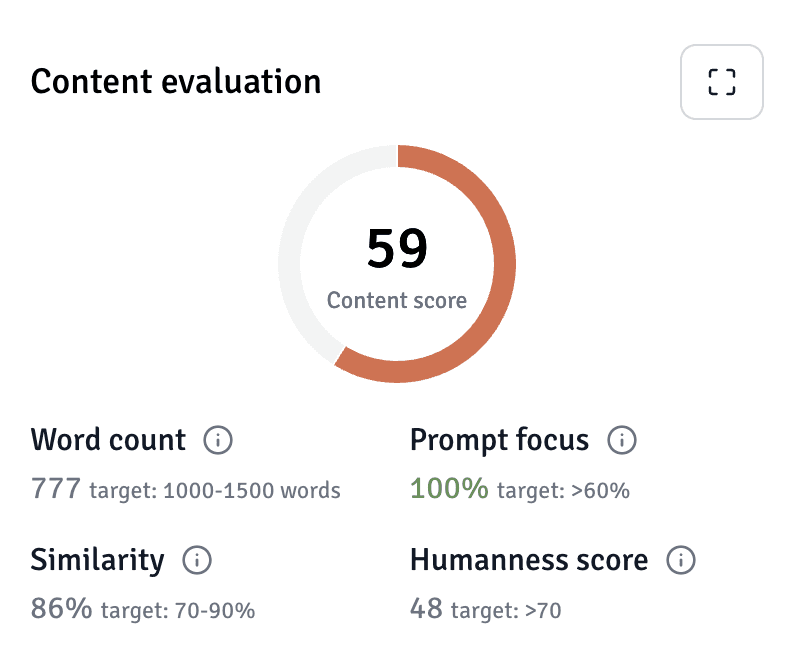
Telepathic content score
This is the go-to for our customers. We’ve built a proprietary scoring system to help you understand if your content is following the best practices in terms of structure, SEO, humanness score, style, and lots more.
Brand visibility in AI answers
The most direct metric is simple yet powerful: how often does your brand appear in AI-generated responses for relevant queries?
The metric itself is straightforward:
Mention Rate = (Number of responses mentioning your brand / Total relevant queries tested) × 100 × Popularity of that provider for that query
A visibility rate above 30% in your core topic areas indicates strong AI presence.
URL citation rate and domain authority in AI outputs
Citations are the gold standard of AI visibility. When Perplexity lists your article as a source or ChatGPT references your research, that’s validation that AI systems view your content as authoritative.
Tracking citation rates involves monitoring:
Direct URL mentions in AI responses
Domain references even without specific URLs
Frequency of citation across different query types
We calculate this as:
Citation Rate = (AI responses citing your domain / Total relevant AI responses analyzed) × 100
What’s fascinating is that citation patterns differ across platforms. ChatGPT tends to favor comprehensive guides and authoritative sources. Perplexity leans heavily on recent, well-structured content. Google’s AI Overview often pulls from sites it already ranks highly in traditional search.
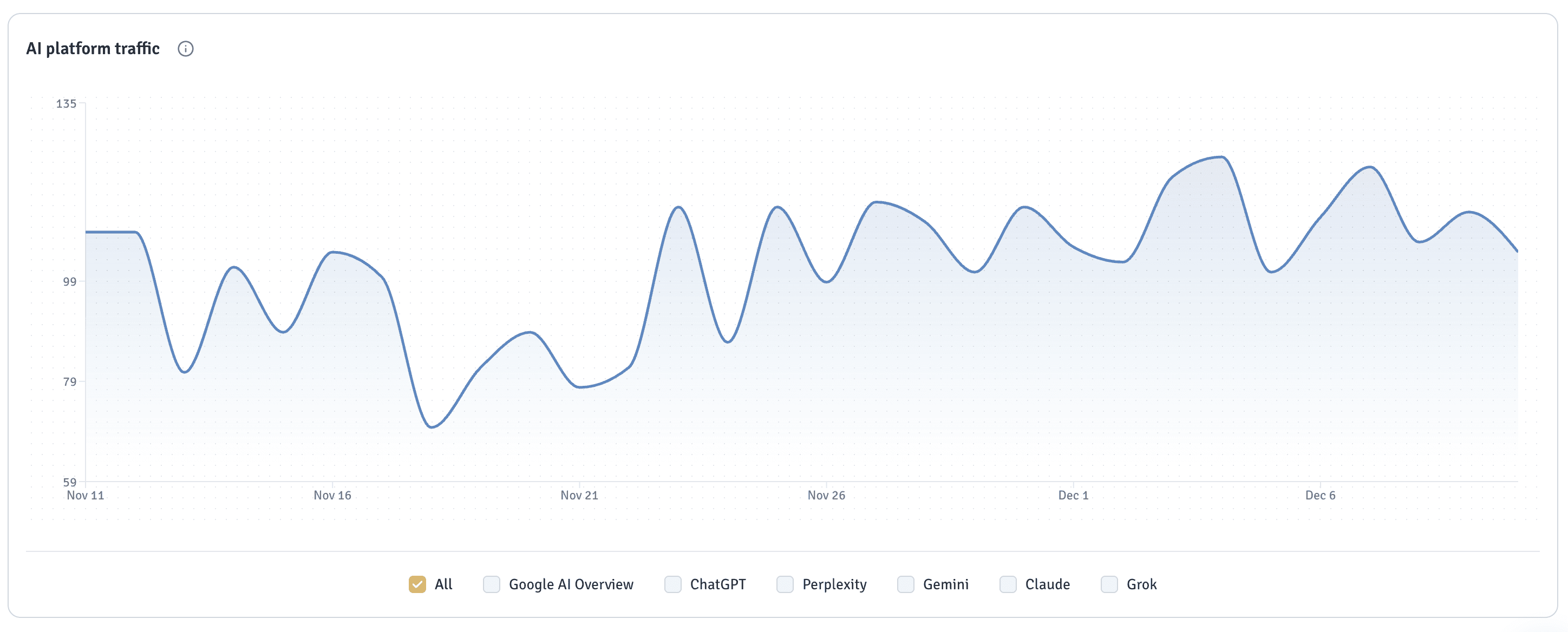
Tracking AI-driven traffic and leads
This is where things get tricky. Why? AI platforms don’t always pass referrer data, making attribution challenging.
Here’s what actually works:
Add a “How did you hear about us?” field to your forms with AI tools as options
Train your sales team to ask discovery questions about the buyer’s research process
Monitor unusual spikes in direct traffic following AI platform updates
Track branded search increases that correlate with AI visibility improvements
One client discovered that 23% of their “direct” traffic was actually users typing their URL after seeing it in ChatGPT responses. They only figured this out through post-conversion surveys.
Challenges and best practices in AI visibility evaluation
What’s the biggest challenge? The black box problem. AI systems don’t publish ranking factors or provide search consoles. You’re essentially reverse-engineering visibility through observation and testing.
Data consistency is another hurdle. AI responses vary based on:
User conversation history
Platform updates (which happen constantly)
Geographic location and language settings
Even the time of day
This variability means you need larger sample sizes and longer measurement periods than traditional SEO. We recommend minimum 30-day evaluation windows with at least 100 prompt variations per topic area.
Best practices we’ve learned along the way:
Document everything. Screenshot AI responses, note timestamps, track platform version
Cross-reference findings across multiple AI platforms
Focus on trends, not individual data points
Next steps to improve your AI search presence
Start with the gaps. Where are competitors appearing that you’re not? What types of content are AI systems favoring in your space?
The pattern we see repeatedly: AI platforms favor content that directly answers questions, provides comprehensive coverage, and includes clear structure with headers and summaries. They’re looking for content that helps them help users.
Ready to take action? Consider this your evaluation framework:
Establish baseline metrics using the methods above
Identify top-performing competitor content in AI responses
Analyze the delta between their content structure and yours
Test improvements with small content batches
Scale what works
In short, evaluating AI search visibility isn’t about abandoning everything you know about content quality. It’s about adding new lenses to assess whether your content serves the needs of AI systems as effectively as it serves human readers.
Now you know how to measure whether your content makes the cut.
Similar Blogs



Get found in AI search
Ready to start?